
Moving to a new home comes with a long checklist of tasks. Between packing, transporting furniture, updating addresses, and settling into a new environment, reconnecting your DStv service is often something homeowners leave until the last minute.
Unfortunately, many people discover that moving a DStv system is not as simple as unplugging the decoder from one house and plugging it into another.
Your DStv setup relies on several components working together, including the decoder, satellite dish, LNB, cabling, and signal configuration. If any part of the system is missing, damaged, or incorrectly installed, you may find yourself without television when you arrive at your new home.
The good news is that relocating your DStv system can be straightforward when done correctly. Understanding what needs to be moved, what should stay behind, and how the system is reconnected can help you avoid unnecessary delays and frustration.
Planning a DStv Relocation?
Fill in the form below and get professional assistance moving and reconnecting your DStv system at your new home.
What Does DStv Relocation Actually Involve?
Many people think DStv relocation simply means moving the decoder from one property to another.
In reality, there is usually much more involved.
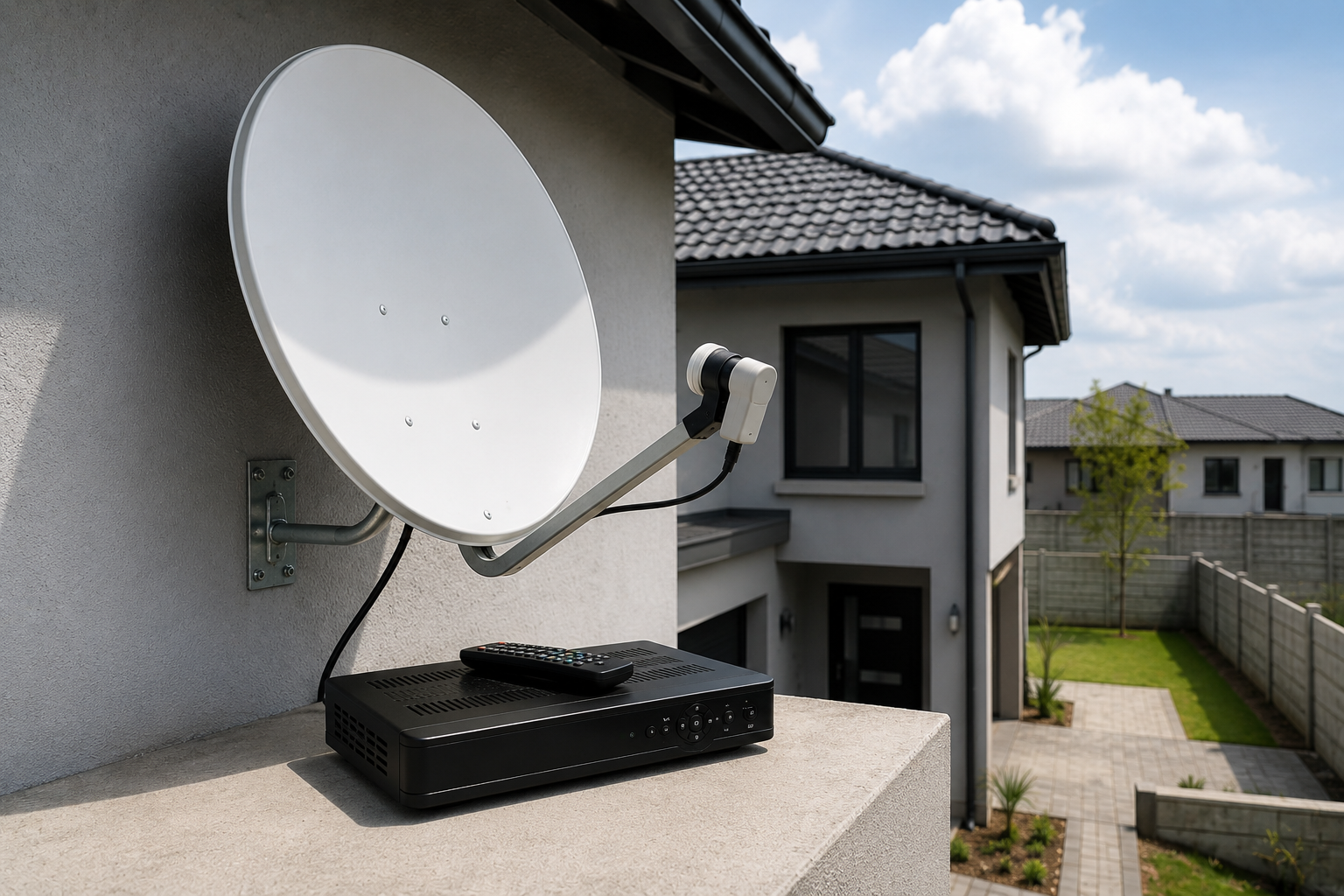
A complete DStv system consists of several components that work together to receive and display satellite television signals. While the decoder is the part most homeowners interact with, it cannot function without a properly installed dish, LNB, cables, and signal alignment.
When relocating, you need to determine whether the existing dish will be moved to the new property, whether there is already a compatible dish at the new home, and whether the cabling and equipment are suitable for your setup.
Each relocation is slightly different depending on the condition of the equipment and the requirements of the new property.
What Equipment Should You Move?
One of the most common questions homeowners ask is what equipment should actually be taken to the new house.
The decoder should almost always be moved because it contains your viewing settings and is linked to your DStv account.
Remote controls, power supplies, HDMI cables, and any additional viewing equipment should also be packed carefully and transported with your other household items.
The satellite dish itself is a different matter.
Some homeowners choose to move the existing dish, while others leave it behind and install a new one at the new property.
The right decision depends on the condition of the dish, the agreement with the buyer or landlord, and whether a suitable dish already exists at the destination.
Can You Use the Existing Dish at the New Property?
In many cases, yes.
If the property already has a satellite dish installed, it may be possible to use it with your existing decoder.
However, there are several factors that need to be checked first.
The dish must be correctly aligned, the LNB must be functioning properly, and the cabling must be in good condition.
Many homeowners assume an existing dish will automatically work, only to discover signal problems after moving in.
This is particularly common in homes where the dish has not been used for years or where previous occupants used different equipment.
Testing the signal before relying on the installation is always recommended.
Should You Move Your Existing Dish?
The answer depends on the condition of the equipment and the circumstances of the move.
If the dish is relatively new and in good condition, relocating it can be a practical option.
However, older dishes sometimes show signs of corrosion, weather damage, or wear that may make replacement the better long-term investment.
Moving a dish also requires careful removal, transportation, and reinstallation.
The dish must be mounted securely at the new property and aligned accurately to receive the correct satellite signal.
Because satellite alignment requires precision, many homeowners choose professional relocation services rather than attempting the process themselves.
Why Dish Alignment Is Important After Relocation
Even if a dish arrives at the new property in perfect condition, it still needs to be aligned correctly.
Satellite dishes cannot simply be pointed in a general direction and expected to work.
A small error in positioning can significantly reduce signal quality or prevent the decoder from receiving channels altogether.
This is one of the main reasons people experience no-signal errors after moving house.
They assume the equipment is faulty when the real issue is alignment.
Professional signal meters allow technicians to position the dish accurately and ensure the strongest possible signal is achieved.
What Happens to Your DStv Subscription?
Fortunately, moving house does not affect your DStv subscription.
Your account remains active regardless of where you live.
Once the decoder is connected correctly and receiving signal, your channels should be available as normal provided the subscription is current.
However, if the decoder has been disconnected for an extended period or there have been account-related changes, a decoder refresh may sometimes be required.
This is usually a simple process and can often be completed quickly.
Understanding that your subscription moves with you helps eliminate one of the biggest concerns homeowners have during relocation.
Common Problems People Experience After Moving
Many relocation issues are caused by installation problems rather than account issues.
A decoder that worked perfectly at the previous property may suddenly display errors at the new location because the signal setup is different.
Signal loss, missing channels, weak signal strength, and intermittent reception are all common after relocation.
Sometimes the issue is related to damaged cabling that was not noticed during the move.
In other cases, the dish may not be aligned correctly or the LNB may be faulty.
Because several different faults can produce similar symptoms, proper diagnosis is often required before the problem can be resolved.
Extra View Considerations When Moving
If your home uses DStv Extra View, relocation becomes slightly more complex.
Extra View systems rely on communication between multiple decoders.
When moving to a new property, all equipment must be reconnected correctly and communication links must be restored.
Even if the primary decoder works, the secondary decoder may experience heartbeat errors or communication failures if the setup is not configured properly.
This is why many homeowners prefer professional relocation when Extra View is involved.
Correct setup from the start helps avoid troubleshooting issues later.
Need Help Reconnecting Your DStv?
Get expert assistance setting up your decoder, dish, and signal at your new property.
Can You Move DStv Yourself?
Technically, yes.
Many homeowners choose to disconnect and transport their own equipment.
However, moving the equipment is usually the easy part.
The challenge comes when reconnecting everything correctly at the new property.
Without proper tools and signal testing equipment, it can be difficult to determine whether the dish is aligned correctly or whether signal quality is adequate.
Some homeowners spend hours trying to solve signal problems that could have been identified in minutes by a technician.
While DIY relocation is possible, it is not always the fastest or most reliable option.
How Long Does DStv Relocation Take?
The time required depends on the complexity of the installation.
A simple reconnection using an existing, functional dish may be completed relatively quickly.
More complex relocations involving dish removal, transportation, new mounting locations, cabling, and Extra View configurations naturally take longer.
Factors such as property size, cable routing requirements, and equipment condition can also influence the installation time.
Planning ahead before moving day can help reduce delays and ensure entertainment is restored as quickly as possible.
When Is a New Installation Better Than Relocation?
There are situations where installing new equipment makes more sense than moving old equipment.
For example, if the existing dish is damaged, heavily corroded, or nearing the end of its lifespan, replacement may provide better long-term value.
Similarly, if the new property already has suitable infrastructure in place, it may be more practical to use the existing dish and focus on reconnecting the decoder.
Every relocation should be assessed individually.
The most cost-effective solution is not always the same for every household.
Common Mistakes Homeowners Make During DStv Relocation
One of the biggest mistakes is assuming every dish is compatible and ready to use.
Another common issue is failing to inspect cables and connectors before reconnecting equipment.
Homeowners also frequently underestimate the importance of proper alignment. A dish can appear correctly positioned while still delivering poor signal quality.
Some people forget to move essential accessories such as power supplies, remote controls, or HDMI cables, leading to unnecessary delays once they arrive at the new property.
Avoiding these mistakes can make the relocation process much smoother.
Why Professional DStv Relocation Saves Time and Stress
Moving home is already stressful enough without adding signal problems and decoder issues to the list.
Professional relocation services ensure that the equipment is installed correctly, signal levels are tested, and any faults are identified before they become larger problems.
Rather than spending hours troubleshooting missing channels or no-signal errors, homeowners can focus on settling into their new property.
Professional setup also provides peace of mind that the system is operating as intended.
Final Thoughts
Relocating DStv to a new property involves much more than moving a decoder from one room to another.
Signal quality, dish alignment, cabling, LNB condition, and installation quality all play important roles in ensuring the system works properly after the move.
Whether you are moving a basic setup or a more advanced Extra View system, taking the time to reconnect everything correctly can save considerable frustration.
A properly planned relocation helps ensure that your entertainment is ready to go as soon as you settle into your new home.
Moving an Extra View Setup?
Fill in the form below and let a technician reconnect your entire DStv system correctly the first time.